

Picture a Friday afternoon clinic, fully booked, yet the waiting room is half empty, and the practitioner in Room 2 has a gap all afternoon. This is a common scenario in busy practices, and it’s exactly the kind of problem practice management analytics is built to solve.
In this article, we look at how clinics can use data to strengthen day-to-day operations, from appointment utilisation to service trends.
What Is Practice Management Analytics?
Practice management analytics is the process of collecting and reviewing operational data from a clinic’s day-to-day activities. It draws on information from scheduling systems, billing platforms and patient management software.
Unlike clinical analytics, which focuses on treatment and patient outcomes, practice management analytics is concerned with the business of running a clinic. It looks at questions like:
- How full are appointment books each week?
- Which times or days see the most no-shows?
- Are practitioners working at capacity, or is availability going unused?
By answering these questions, clinics gain a clearer view of how the practice actually runs, rather than relying on guesswork.
Why Clinic Operations Analytics Matters for Modern Practices
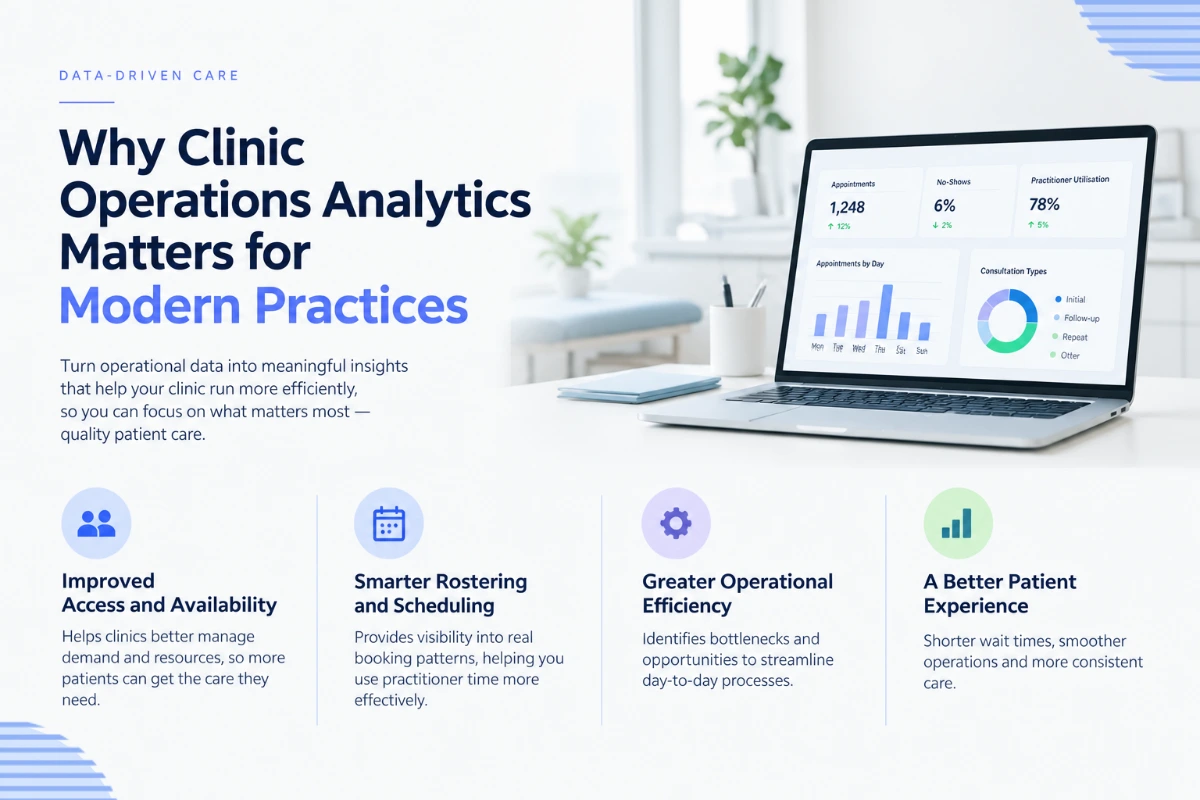
Australian healthcare data consistently shows that access and availability shape how patients experience care. According to the National Rural Health Alliance, data-driven insights help clinics gather the information needed to manage better and operate their practice, particularly where workforce and demand pressures exist.
This applies well beyond general practice. Any clinic managing multiple practitioners, consultation types or locations can benefit from clearer operational data. Clinic operations analytics turns raw scheduling and billing records into information that practice managers can actually act on.
Reviewed regularly, this data supports better rostering, more efficient use of consultation time, and fewer administrative bottlenecks.
Key Areas Where Practice Management Analytics Adds Value
Healthcare data analytics for clinics tends to be most useful when applied to a handful of core operational areas. Below are the areas where clinics typically see the clearest benefit.
Appointment and Patient Flow Analytics
Patient flow analytics helps identify where time is lost in the patient journey, from booking through to consultation. Tracking appointment utilisation and no-show rates highlights patterns a practice manager might otherwise miss.
Common metrics include:
- Appointment fill rates by day and time slot
- No-show and late cancellation trends
- Average time between booking and consultation
Practitioner Availability and Scheduling
Clinic staff scheduling analytics give practice managers visibility over how practitioner time is actually used. Instead of relying on a static roster, managers can compare planned availability against real booking patterns.
This makes it easier to:
- Adjust consultation durations based on demand
- Identify underused time slots
- Balance workloads across a growing practitioner base
Service and Product Trends
Practice management software analytics can also surface trends in the types of consultations or services patients are booking. Reviewing these patterns over time helps clinics understand shifting demand.
This is particularly relevant for practices with a defined product or service catalogue, where visibility over stock and prescribing trends supports better day-to-day planning.
Billing and Claims Analytics
Clinic billing and claims analytics, along with revenue cycle analytics for clinics, give practice managers a clearer financial picture. Tracking claims status and payment timelines helps reduce administrative delays.
Reviewing this data regularly can help reduce clinic costs with analytics by identifying where billing processes are slowing down.
Turning Data Into a Clinic KPI Dashboard
Collecting data is only the first step. The real value of medical practice analytics comes from presenting it in a way practice managers can use day-to-day.
A clinic KPI dashboard consolidates scheduling, billing and service data into one view. Rather than checking multiple systems separately, practice managers can monitor practice management KPIs at a glance and respond to trends earlier.
Many clinics build this using tools such as Power BI or Tableau for healthcare, drawing data from an EHR integration or a central clinic data warehouse. Others prefer platforms with reporting built directly into their day-to-day practice management software (PMS).
Choosing Practice Management Software With Built-in Analytics
As highlighted by the Institute of Health and Nursing Australia, the right front-office system, EHR and medical billing software can help practices gather the data they need to grow. This points to a broader shift across the sector: analytics is becoming a standard feature of practice management, not an optional extra.
When comparing platforms, practice managers are increasingly looking beyond scheduling and billing alone. Built-in reporting, EHR data analytics and clear visual dashboards have become important factors in choosing a system that supports clinic workflow optimisation.
Supporting Data-Driven Clinic Operations
Using practice management analytics well means treating data as an operational tool, not a clinical one. It’s about understanding how a clinic runs, where time and capacity are being used, and where small adjustments can improve day-to-day efficiency.
For prescribers working in the medicinal cannabis space, having this kind of operational insight alongside patient management, telehealth and compliance tools in one place can make daily administration considerably lighter. OnePhenix brings these elements together in a single platform, giving practice teams a clearer view of how their clinic is running.
If you’re curious about how streamlined reporting and practice data could fit into your own workflow, it’s worth exploring what a purpose-built platform like OnePhenix has to offer.