

Managing multi-location clinics in Australia requires clear processes, coordinated teams and reliable information systems. As medical practices expand, keeping staff schedules, patient records and administrative workflows consistent across locations becomes increasingly important.
The right approach to multi-site clinic management starts with standardised procedures, effective communication and appropriate digital tools. This guide explores practical ways to organise clinic operations, coordinate healthcare teams and manage administrative responsibilities across multiple locations.
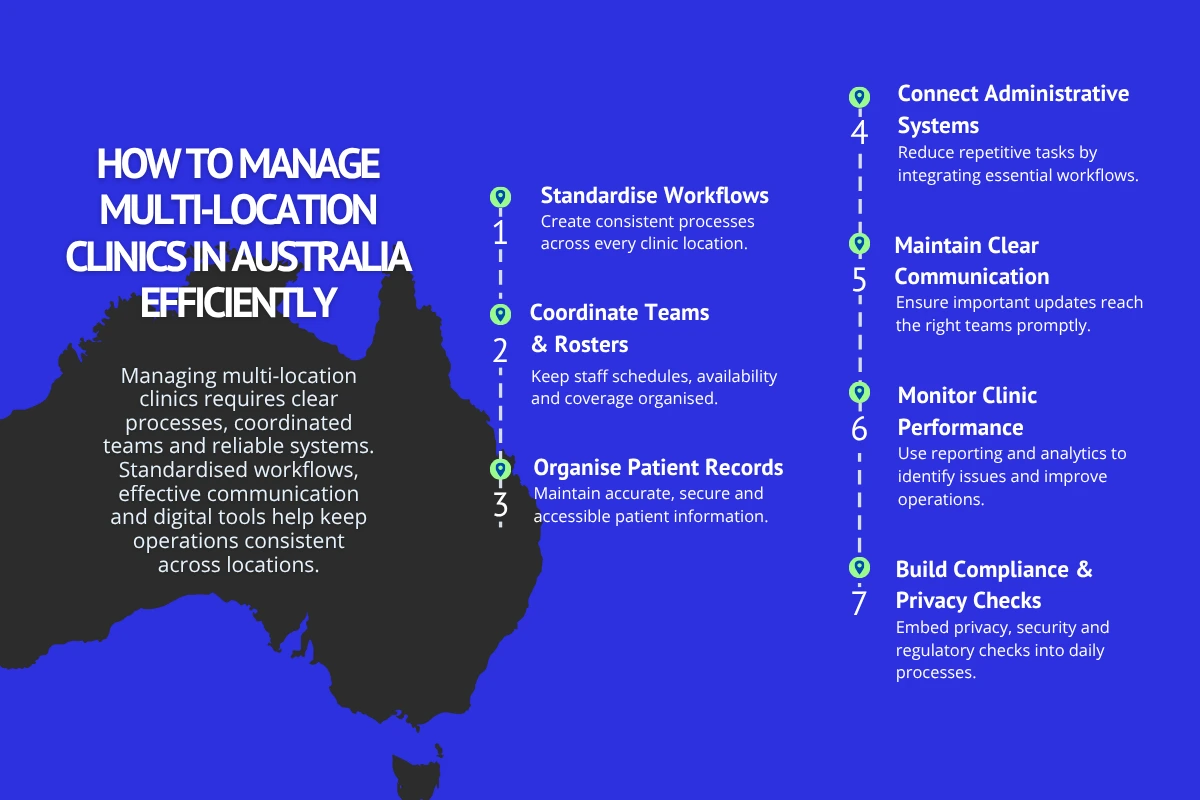
1. Standardise Workflows Across Every Clinic Location
When each clinic follows different administrative procedures, staff can spend additional time resolving inconsistencies. Standardising routine tasks helps teams understand their responsibilities and follow agreed processes.
Start by documenting the procedures that apply across your locations. These might include appointment booking, patient registration, clinical documentation, referrals, billing and record management.
To standardise clinic operations:
- Develop consistent procedures for routine administrative tasks.
- Create approved templates for commonly used documents.
- Define responsibilities for reception, practitioners and administrative staff.
- Establish clear processes for handling exceptions and escalating issues.
- Review procedures regularly as operational requirements change.
Standardisation does not mean every clinic must operate identically. Local requirements may differ, so document any approved variations.
For practices exploring how to manage multiple medical clinics, a shared set of procedures provides a practical starting point. It also makes onboarding easier when staff move between locations.
2. Coordinate Teams and Rosters Across Multiple Locations
Managing staff across multiple clinic locations involves more than filling appointment slots. Practice managers must consider practitioner availability, leave, consultation requirements, administrative coverage and changes to daily schedules.
Poor communication about roster changes can create confusion for staff and patients. A consistent scheduling process helps everyone understand where they need to work and when they are expected to be available.
How to manage multi-location clinics in Australia with better scheduling processes
Establish one agreed process for preparing, approving and communicating rosters. Use suitable medical clinic scheduling software or healthcare staff scheduling software where it meets your practice requirements.
Practical steps include:
- Assigning clear responsibility for roster preparation and approval.
- Recording practitioner availability and approved leave.
- Confirming room, equipment and administrative support requirements.
- Communicating schedule changes through an agreed channel.
- Reviewing staffing coverage before each clinic session.
A shared calendar may help teams coordinate availability, but it should reflect actual operational needs. Before adopting multi-location practice management software, confirm whether it supports your required rostering and scheduling functions.
3. Organise Patient Records and Clinical Documentation
Managing patient records across multiple clinic locations requires consistent documentation practices and appropriate access controls. Staff need clear procedures for recording information, identifying the correct patient and handling records securely.
A centralised patient management approach can help reduce unnecessary duplication when supported by suitable systems and workflows. However, practices should confirm that their chosen platform supports the access arrangements and record-sharing requirements they need.
Consider these practical measures:
- Use consistent patient registration and identification procedures.
- Establish documentation standards for clinical notes and administrative records.
- Define who can access, update and share information.
- Document processes for correcting records and resolving discrepancies.
- Train staff in privacy, confidentiality and secure information handling.
Australian practices should also review their obligations under applicable privacy legislation and professional standards. The Office of the Australian Information Commissioner provides guidance on Australian privacy requirements.
For practices assessing healthcare practice management software, evaluate how patient information is recorded, accessed, maintained and protected across the intended operating model.
4. Connect Administrative Systems and Reduce Repetitive Work
Different systems for appointments, billing, referrals and documentation can create unnecessary administrative steps. Staff may need to enter the same information more than once or switch between applications to complete routine tasks.
Healthcare workflow automation and integrated practice management tools may help reduce some of this duplication. The value depends on the functions available, how systems connect and how the practice configures its processes.
When assessing clinic management software in Australia, consider whether it supports your essential workflows, including:
- Patient management and clinical documentation.
- Appointment and consultation administration.
- Referral preparation and tracking.
- Electronic prescribing workflows.
- Billing and payment processing.
- Reporting and administrative oversight.
OnePhenix provides practice management functionality for Australian medicinal cannabis prescribers, including patient management, telehealth, referrals, eScripts, billing and reporting tools.
Practices should confirm individual features, integrations and operational requirements before implementation. Software should support established procedures rather than replace appropriate staff oversight.
5. Maintain Consistent Communication Between Locations
Multi-site healthcare management depends on timely, accurate communication. Without clear channels, teams may miss schedule changes, duplicate administrative work or misunderstand their responsibilities.
Establish communication practices that distinguish routine updates from urgent operational issues. Staff should know where to find current procedures, who approves changes and how to raise concerns.
A practical communication framework can include:
- Short operational check-ins with relevant team members.
- A shared location for current policies and procedures.
- Clear handover processes when responsibilities change.
- Defined escalation pathways for unresolved issues.
- Regular reviews of recurring administrative problems.
Digital collaboration tools can support these processes, but staff need clear expectations about what information may be shared and through which channels.
For larger practices, appointing a responsible contact for each location can help coordinate local requirements with broader operational procedures.
The aim is not to create more meetings. It is to ensure that essential information reaches the right people without adding unnecessary administrative work.
6. Monitor Performance and Review Clinic Operations
As a practice expands, informal oversight can become less effective. Managers need reliable information to understand administrative workloads, identify bottlenecks and review how each location operates.
Medical practice reporting and analytics can help organise information about activity, billing and revenue. The usefulness of these reports depends on data quality, consistent recording practices and appropriate interpretation.
Consider reviewing:
- Appointment utilisation and cancellation patterns.
- Staffing coverage and administrative workload.
- Billing processes and outstanding administrative tasks.
- Referral processing and follow-up procedures.
- Revenue reporting by practitioner or service, where appropriate.
- Recurring workflow issues across locations.
Use these findings to identify processes that may need attention. Avoid comparing locations without considering differences in staffing, operating hours, service models and local requirements.
OnePhenix includes reporting and analytics functionality that can support financial and operational oversight. Practices should confirm which reports are available and determine how the information fits their management needs.
Regular reviews help managers make informed operational decisions rather than relying solely on anecdotal feedback.
7. Build Compliance and Privacy Checks Into Daily Processes
Medical practice compliance in Australia involves ongoing responsibilities, not simply the completion of forms or reports. Requirements can vary according to the practitioner, services provided, applicable legislation and regulatory arrangements.
Digital tools may support administrative tasks, but they do not independently establish that a practice meets every obligation. Practices should maintain documented procedures, assign responsibility and review relevant requirements regularly.
For medicinal cannabis prescribers, administrative processes may include maintaining appropriate records, managing electronic prescriptions and preparing applicable Authorised Prescriber documentation and reports.
OnePhenix provides tools for electronic prescribing, medicinal cannabis product information, Authorised Prescriber letters and six-monthly reporting. These functions can assist with associated administrative workflows, but practitioners remain responsible for checking their obligations and ensuring submissions are accurate and timely.
Consult the Therapeutic Goods Administration (TGA) for current information relevant to medicinal cannabis prescribing and regulatory requirements.
Practices should also review privacy controls, staff access permissions, record retention procedures and incident-response arrangements. Regular training and periodic audits can help identify gaps before they become recurring operational problems.
Create More Consistent Clinic Operations
Managing multiple clinic locations efficiently requires coordinated staffing, consistent workflows, organised records and clear accountability. A practical operating framework helps teams understand their responsibilities and gives managers a clearer view of day-to-day administration.
Start by documenting essential procedures, improving roster communication and reviewing the systems your practice uses. Then assess where integrated digital tools could simplify administrative tasks without introducing unnecessary complexity.
OnePhenix brings together practice management functionality for Australian medicinal cannabis prescribers, including patient administration, telehealth, referrals, electronic prescribing, billing and reporting tools.
If you are reviewing your current processes, explore the OnePhenix website to learn more about its features and consider whether they suit your practice’s operational requirements.
This article provides general operational information and is not legal or regulatory advice. Practices and practitioners should confirm their applicable obligations with the relevant authorities and qualified advisers.