

Medical practitioners often feel overwhelmed by paperwork and fragmented systems. Therefore, reducing administrative burden remains essential to prioritise patient care.
This article explains how integrated practice management software streamlines workflows. For example, it includes secure electronic health records, telehealth tools, automated billing, and e-prescribing.
Additionally, you will learn how to meet Australia’s telehealth compliance requirements. These include confirming patient identity and maintaining encrypted records.
Moreover, you can use digital tools to reduce paperwork and simplify daily operations. In short, smarter systems automate routine tasks, improve clinic efficiency, and help doctors focus on patients.
Centralise Patient Data and Workflow
Storing all patient information in one secure digital system reduces data silos and duplication. Consequently, a cloud-based practice management system creates a single, reliable patient database.
This system stores notes, medical history, and documents in one place. As a result, staff avoid manual filing and searching across multiple programs. Instead, they retrieve records within seconds.
Key advantages include:
Integrated EHR: The system captures all patient data electronically, including demographics, visit notes, and prescriptions. Therefore, it reduces paperwork and minimises transcription errors.
Customisable Templates: Pre-built referral letters, certificates, and patient communications auto-fill from stored data. For instance, referral forms populate patient details automatically, saving time and reducing errors.
Centralised Messaging: Secure internal messaging allows doctors and nurses to share results and follow-ups efficiently. Consequently, staff no longer rely on printing or faxing.
By automating record-keeping, practitioners reclaim valuable time each week. In fact, studies show automation can save thousands of work hours annually. Instead of handling paperwork, staff update records and send documents with a few clicks.
Furthermore, reports indicate inefficient paperwork can consume nearly half of a provider’s day. Therefore, a robust practice management platform significantly reduces this burden.
Secure, Compliant Telehealth Consultations
Telehealth is now a routine part of practice, but clinicians must deliver it securely and legally. Therefore, Australian guidelines require identity checks and encrypted systems for every consultation.
Modern practice software embeds these requirements into daily workflows:
Verified Patient ID: Before each consultation, staff confirm patient identity using photo ID or security questions. This approach aligns with Medical Board recommendations.
Encrypted Video Calls: Clinicians conduct consultations through end-to-end encrypted platforms. As a result, patient privacy remains protected at all times. These systems also securely manage records, images, and prescriptions.
Comprehensive Record Access: During consultations, clinicians access full patient histories, test results, and clinical notes. Consequently, they maintain continuity of care. The system saves all notes directly into the patient record to meet AHPRA documentation requirements.
Consent and Follow-up: The platform prompts clinicians to obtain informed consent before proceeding. Additionally, it flags when in-person examinations may be necessary. It also supports sending summaries, eScripts, and referrals after each consultation.
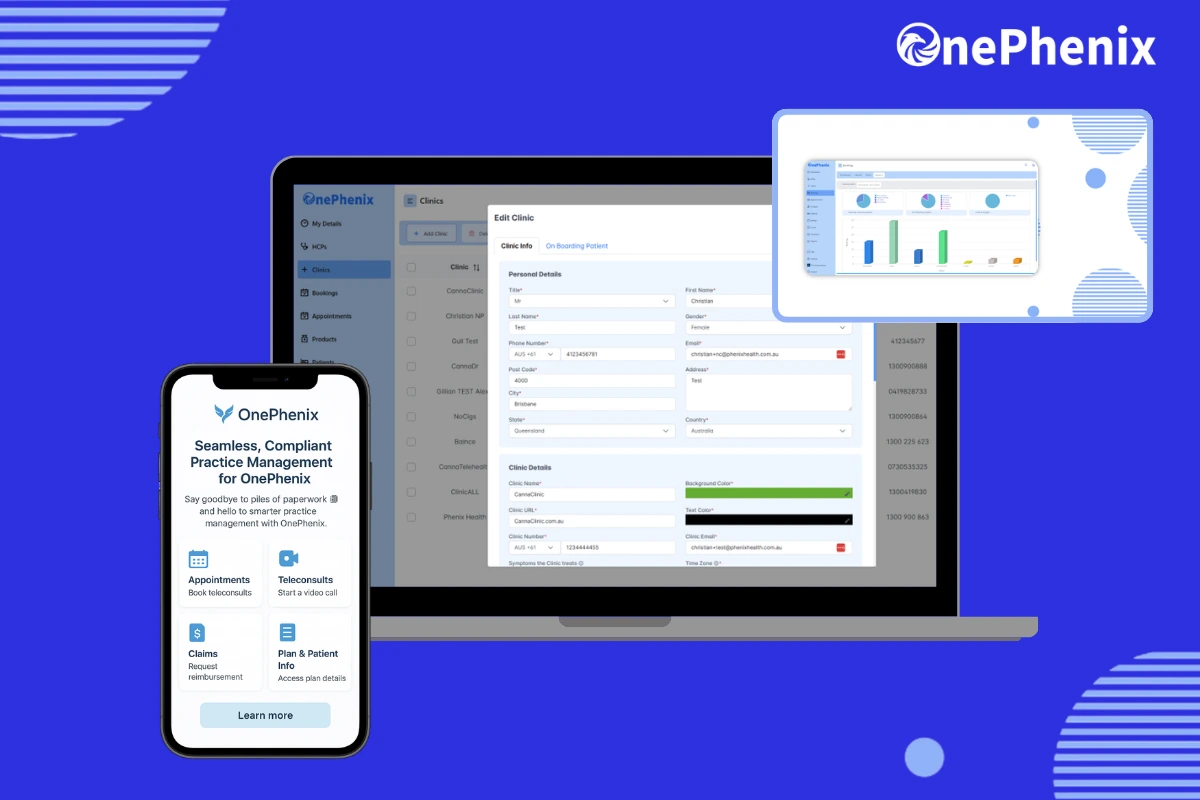
For example, OnePhenix’s integrated telehealth solution allows doctors to consult via video while viewing patient records in one interface. As a result, clinicians maintain efficiency and compliance with updated guidelines.
Importantly, AHPRA standards emphasise that a practitioner’s duty of care must always come first. Meanwhile, nearly a quarter of Australians used telehealth in 2024 to 2025. Therefore, a secure, integrated telehealth module improves patient flow while maintaining high standards of safety and privacy.
Automate Billing, Claims and Prescriptions
Manual billing and claims paperwork often frustrate doctors and staff. Therefore, integrated practice management tools automate financial tasks to reduce errors and delays.
For instance, key features include:
Integrated Billing Software: The system connects directly to Medicare, DVA, and private insurers. Consequently, it auto-fills claim forms and submits them electronically, reducing manual effort.
Digital Payments: Patients can pay invoices online via credit card, PayPal, or secure payment links. As a result, clinics avoid printing and mailing statements while accelerating collections.
Automated Reimbursements: The software tracks claim status and updates in real time. Additionally, it notifies staff of outstanding claims and reconciles payments efficiently.
ePrescribing (eScript): Doctors issue prescriptions directly within the system. The platform validates each eScript through Services Australia in real time, ensuring legal compliance. Therefore, it replaces handwritten scripts and reduces dispensing errors.
By automating these processes, clinics reduce paperwork and improve cash flow. In fact, research shows that removing manual billing steps significantly cuts administrative time. For example, one study found scheduling time dropped by 75 per cent, while claim processing time decreased by 35 per cent after automation.
As a result, staff spend less time on calls and paperwork. Meanwhile, doctors avoid chasing unpaid invoices and focus more on patient care.
Streamline Scheduling and Clinic Operations
Managing appointments, staff rosters, and clinic workflows manually often drains efficiency. Practice management platforms automate workflows to optimise operations.
Custom Appointment Templates: Clinics define visit types and durations, such as “new patient consult – 30 minutes” or “follow-up – 15 minutes.” Providers’ available slots auto-fill based on working hours, ensuring accurate and swift booking.
Online Booking and Reminders: Patients book online via the clinic website or directories like CannaDr. Automated SMS and email reminders reduce no-shows. Over 25 per cent of practices report significant drops in missed appointments with reminders.
Task Automation: The system triggers follow-up tasks automatically. For example, it can generate reminders for overdue follow-ups or prompt review of lab results. This reduces the risk of tasks slipping through the cracks.
Resource Management: Shared resources, such as consultation rooms or specialists, are scheduled efficiently. The software prevents double-booking and shows real-time availability.
Efficient scheduling improves clinic flow and productivity. One case study found that improved scheduling increased hospital revenue by over $8 million while reducing no-shows and expanding appointment capacity. Even smaller clinics benefit, as optimised scheduling allows clinicians to spend more time with patients and less on administrative rescheduling.
Enhance Referral and Communication Flow
Running referrals often involves duplicative forms and repeated follow-ups. Practice management solutions simplify referrals and improve intra-office communication.
Auto-Populated Referrals: Doctors generate referral letters with one click. The system automatically inserts patient details and clinic letterhead, saving time and avoiding errors. The RACGP notes that GPs are frustrated by “going back and forth between different programs and different forms.” A single platform eliminates this red tape.
Specialist Directory: Platforms may include or link to searchable specialist directories. Doctors can quickly select the right specialist and send referrals electronically, removing the need to hunt for contacts manually.
Secure Messaging: Teams, including GPs, specialists, and nurses, share documents and notes within the platform. This replaces fax and email, keeping records secure and centralised.
Coordinated Follow-Up: The system flags when referred patients book with specialists or require post-referral checks. This ensures continuity of care and prevents patients from falling through the cracks.
These tools address common pain points: multi-agency forms and fragmented communications waste hours. Streamlining referrals and messaging reduces staff chasing signatures or lost faxes while keeping doctors informed.
Focus on Patient Care and Practice Growth
Reducing administrative tasks allows clinicians to focus on patient care and combat burnout. In Australia, 70 per cent of GPs report administrative overload as “out of control,” driving some to leave the profession. Smarter systems reallocate time from paperwork to patient care, boosting morale and service quality.
More Face-to-Face Time: Automating data-entry and billing recovers up to two hours per provider each clinic day. This allows doctors to engage fully with patients.
Reduced Burnout: The Medical Republic notes that trainee doctors spend excessive time on administrative work. Intelligent software and additional clerical support reduce this burden, improving job satisfaction.
Practice Growth: Modern platforms help attract new patients. For example, systems like OnePhenix list clinics on patient-facing networks such as CannaDr and enable seamless online bookings. Clinics control hours, services, and fees, allowing growth at their own pace.
In sum, practice teams reclaim valuable time. As RACGP President Nicole Higgins observes, even a small reduction in administrative burden “will make a big difference… because we’ll have more time for patient care.” By automating workflows and consolidating systems, doctors spend less time on paperwork and more on improving patient outcomes.
How All-in-One Practice Management Platforms Improve Efficiency, Compliance, and Patient Care
Modern digital tools are transforming healthcare operations. Consequently, clinics adopting all-in-one platforms like OnePhenix cut administrative work and improve efficiency.
This platform integrates records, telehealth, e-scripts, billing, and more, consolidating patient information, appointments, and communications in a secure cloud. As a result, compliance and data security are maintained while daily burdens decrease.
Furthermore, listing your practice on such a platform frees up time for patient care and increases clinic visibility. In short, reducing administrative workload with smarter technology directly enhances patient care and strengthens practice performance.